
Glutamine: what it is, when to take it and what EFSA says
What glutamine is, where it is found in food and why it has no authorised health claims in the EU. Then when and how much to take according to…
Your training. Your brands.

L-Glutamine 500 grams images

You save €2.03
Pay in 3 interest-free instalments with PayPal or Klarna, choose it at checkout
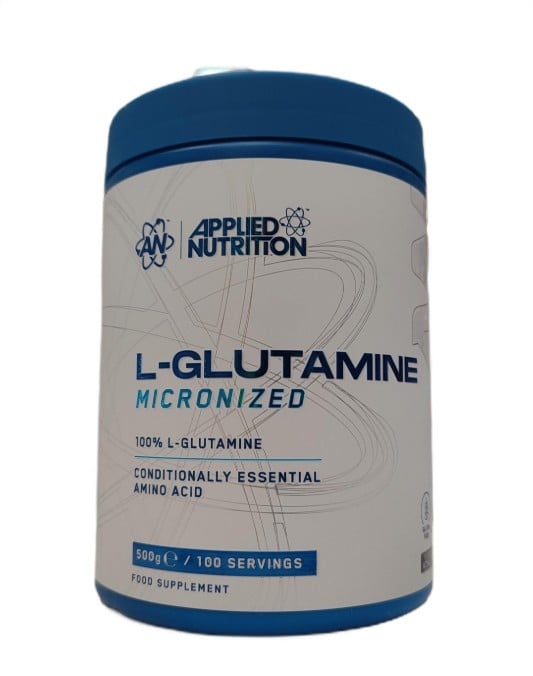
This L-glutamine powder from Applied Nutrition has a single ingredient: micronised L-glutamine, with no flavourings, sweeteners or fillers. The 500 g tub provides 100 servings of 5 g, measured with the scoop supplied. Micronisation reduces particle size, so the powder disperses in water or juice without noticeable clumps. The British brand has every batch tested for banned substances, which matters if you compete in drug-tested sports.
Compared with flavoured formulas or blends with other amino acids, this is micronised L-glutamine and nothing else, in 5 g servings that are easy to measure. The 500 g tub holds 100 servings. A single-ingredient formula lets you know exactly how much you are taking and combine it with the rest of your supplement routine without overlaps.
Mix 1 scoop (5 g) with water or juice and take it one to three times a day with meals. The manufacturer suggests taking one serving straight after training; on rest days you can take it in the morning or between meals. It suits people who lift weights, train for endurance sports or follow a programme with several sessions a week, as well as anyone who prefers single-ingredient supplements they can dose themselves. Do not exceed the recommended daily dose. Food supplements should not be used as a substitute for a varied and balanced diet and a healthy lifestyle. If you are under 18, pregnant or breastfeeding, have a medical condition or take medication, consult a healthcare professional before use. Keep out of reach of children.

What glutamine is, where it is found in food and why it has no authorised health claims in the EU. Then when and how much to take according to…
Leucine, isoleucine and valine: what branched-chain amino acids are, what the 2:1:1, 4:1:1 or 10:1:1 ratios mean and how to compare powders and…

Reviews (0)
No customer reviews for the moment.
Log in to write the first reviewYour review appreciation cannot be sent
Report comment
Report sent
Your report cannot be sent