L-tyrosine: what it does, food sources and what EFSA says
What tyrosine does in the body, where it is found in food and why it has no authorised health claims in the EU. Then L-tyrosine or NALT, how to read the label and who should see a doctor first.
L-tyrosine is an amino acid that the body gets from the protein in food and can also make on its own, starting from another amino acid, phenylalanine. In supplements you find it on its own, in capsules or powder, or inside more complex formulas such as some pre-workouts. This guide explains what it does in the body, where it is found in food, what EFSA assessed and how to read the label of a tyrosine supplement.
The thing to know first: in the European Union there is no authorised health claim for tyrosine. Not on concentration and attention, not on muscles, not on weight. You will see why below.
What is tyrosine?
Tyrosine is one of the twenty amino acids that make up proteins. The form found in food and supplements is L-tyrosine: the "L" refers to the shape of the molecule that the body uses to build proteins. When a label says "tyrosine" or "L-tyrosine", it is the same substance.
It is not an essential amino acid: the body makes it from phenylalanine, which is essential and has to come from food. That is why requirements are often given together, as "phenylalanine plus tyrosine". The exception is people with phenylketonuria, a genetic condition in which phenylalanine is not converted into tyrosine: in that case the diet is set by a doctor.
Where is tyrosine found in food?
It is found in protein-rich foods: milk and cheese, meat, fish, eggs, soy and other pulses, nuts and seeds. The more protein a food contains, the more tyrosine it brings, together with the phenylalanine from which the body can make more.
For a sense of scale: according to the 2007 joint WHO, FAO and UNU report on protein and amino acid requirements, the average adult requirement is about 25 mg of phenylalanine plus tyrosine per kilo of body weight per day. For a 70 kg person that is about 1.75 g a day, an amount that a diet with enough protein covers easily. Protein powders also contain tyrosine, as part of their amino acids.
What does tyrosine do in the body?
Besides going into proteins, tyrosine is the starting point of some molecules that the body makes itself:
- catecholamines: dopamine, noradrenaline and adrenaline. Tyrosine becomes L-dopa, L-dopa becomes dopamine, dopamine becomes noradrenaline and then adrenaline;
- melanin, the pigment of skin and hair;
- thyroid hormones, which are formed from tyrosine and iodine.
This is biochemistry, not the promise of an effect. A substance being the starting point of a molecule does not mean that taking more of it makes the body produce more. That is exactly the question EFSA answered.
Tyrosine, concentration and muscles: what does EFSA say?
In 2011 EFSA, the European Food Safety Authority, assessed three groups of claims on L-tyrosine (EFSA Journal 2011;9(6):2270). These are its conclusions.
| Effect assessed | EFSA conclusion | EU outcome |
|---|---|---|
| Normal synthesis of catecholamines | Cause and effect relationship established, in a diet with adequate protein | Not authorised |
| Attention and concentration | Cause and effect relationship not established | Not authorised |
| Muscle function | Cause and effect relationship not established | Not authorised |
The first case needs explaining. EFSA recognised that tyrosine is needed to make catecholamines, but added that there is no evidence that the protein in the European diet is insufficient for this function. In the EU register this claim is listed as not authorised. A later application on dopamine had the same outcome: with Regulation (EU) No 155/2014 the Commission refused it because EFSA could not give a necessary daily intake of tyrosine, so no conditions of use could be set, and the claim could have misled consumers.
On attention, part of the references involved people with specific disorders, and the expert panel found that those results cannot be extended to the general population. Among the studies on healthy people under stress (cold and high altitude, night work, several tasks at once), the two from which conclusions could be drawn showed no difference from placebo on attention measures. For muscle function there were no useful references.
In practice: in the EU register of health claims, every entry on tyrosine is listed as not authorised. A label or description that, in Europe, promises concentration, attention, energy, mood or performance thanks to tyrosine is using a claim the law does not allow.
Does L-tyrosine help with weight loss?
No, there is no authorised claim linking tyrosine to weight. Tyrosine often appears in formulas sold as "fat burners" or "thermogenics", usually next to caffeine, and that is where the question comes from. Those labels list several ingredients, and no effect on weight can be attributed to tyrosine.
Weight depends on the balance between the calories you eat and the calories you use. An amino acid in capsules does not change that sum.
L-tyrosine or N-acetyl-L-tyrosine: what is the difference?
On labels you find two forms:
- L-tyrosine: the amino acid as it is, as crystalline powder or in capsules;
- N-acetyl-L-tyrosine (NALT): tyrosine with an acetyl group attached to the molecule. The acetyl group makes it much more soluble in water.
Watch the milligrams. In NALT part of the weight is the acetyl group, so 500 mg of NALT correspond to about 406 mg of tyrosine, calculated from the weight of the two molecules. When you compare two products, check which form the label declares and what the dose refers to. Higher solubility does not, on its own, show that more tyrosine reaches the body.
How do you read the label of a tyrosine supplement?
Take the Jarrow Formulas L-Tyrosine as an example: in the facts panel the serving is 1 capsule with 500 mg of L-tyrosine, and the bottle holds 100. The product page gives the directions as one capsule a day on an empty stomach, in the morning. On the label, check:
- the form: L-tyrosine or N-acetyl-L-tyrosine, with the dose referring to that form;
- the serving: how many capsules or grams of powder make one dose;
- the recommended daily dose, not to be exceeded;
- the warnings, which for tyrosine can go beyond the generic ones.
Tyrosine has no nutrient reference value, so you will not find a percentage next to the milligrams. In the Italian Ministry of Health guidelines on "other nutrients" (October 2022 revision) tyrosine has no entry of its own with an intake limit: the dose and warnings printed by the manufacturer on the pack apply. How to read milligrams and percentages is explained in the guide to label units. The tyrosine supplements available are in the tyrosine category.
Who should ask a doctor before taking tyrosine?
The Jarrow L-Tyrosine product page asks you to consult a healthcare professional before use in these cases:
- pregnancy and breastfeeding, and age under 18;
- taking medication, particularly MAO inhibitors, a class of antidepressants;
- particular medical conditions, especially bipolar disorder or a history of melanoma.
These points connect to what tyrosine does in the body: it is the starting point of catecholamines and melanin. Add to them people with phenylketonuria and people taking thyroid medication, since tyrosine is also the basis of thyroid hormones: in both cases the doctor decides. If your label lists different warnings, follow the ones on your pack.
Tyrosine in pre-workouts and creams
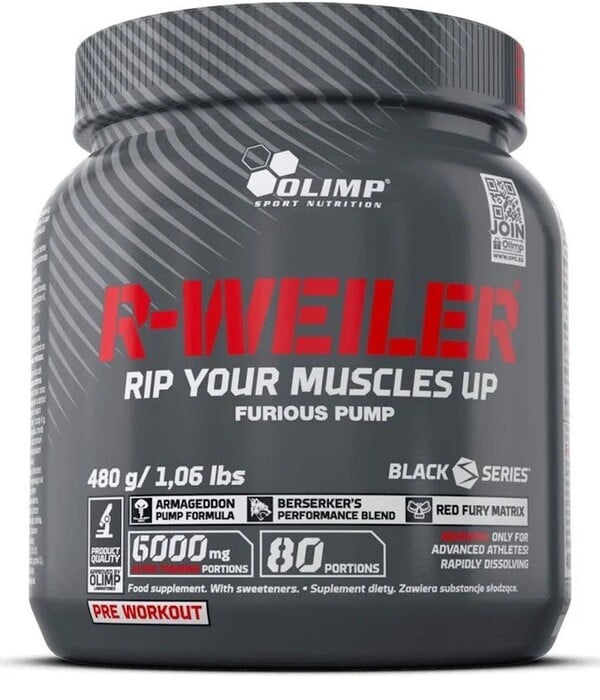
Many pre-workouts list tyrosine among their ingredients, together with caffeine, beta-alanine, citrulline and others. The same rule applies there: tyrosine carries no authorised claim, and what counts is the amount declared per serving. To read a whole pre-workout formula, see the pre-workout guide.
"Tyrosine creams" are something else: they are cosmetics, usually tanning accelerators, and are chosen by the rules for cosmetics, not those for supplements. This guide does not cover them.
Tyrosine in brief
- What it is: an amino acid found in proteins, which the body also makes from phenylalanine.
- Where it is found: in protein foods; the requirement for phenylalanine plus tyrosine is about 25 mg per kilo of body weight per day.
- In the body: it is the starting point of catecholamines, melanin and thyroid hormones.
- EFSA and the EU: no authorised health claim, neither on concentration and attention nor on muscles.
- Weight: it does not make you lose weight.
- Forms: 500 mg of NALT equal about 406 mg of tyrosine.
- Warnings: medication, especially MAO inhibitors, pregnancy, bipolar disorder, melanoma, phenylketonuria: see a doctor first.
This guide is for information only and does not replace medical advice. Product information comes from the labels and descriptions published on the product pages as of 24/11/2026: the label on the pack you receive is what counts.
Products in this guide
- -10%

