
Pre-workout: caffeine, beta-alanine and citrulline explained down to the molecule
Adenosine, carnosine, nitric oxide: what caffeine, beta-alanine and citrulline do in the body, why they are in the formula, how to read doses and forms on the label and which warnings really matter.
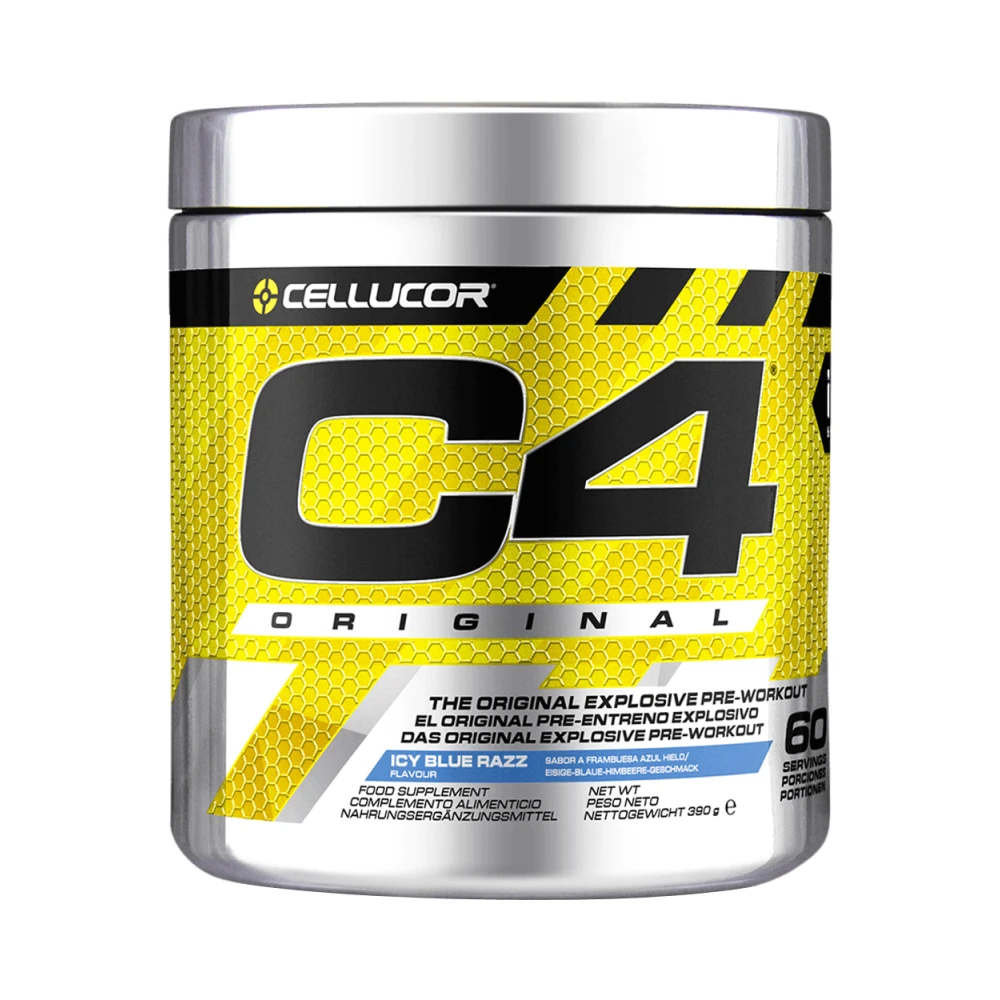
The pre-workout is the most engineered product on the shelf: a single scoop can hold ten ingredients, each there for a precise biochemical reason. To really understand it you have to go down to the level of molecules: receptors, enzymes, buffers. This guide does that with the three ingredients behind almost every formula, caffeine, beta-alanine and citrulline, and then shows you how to read the label like a formulator.
First of all: what the law says
In the European Union, the effects of a supplement can only be stated if the claim has been authorised (Reg. EC 1924/2006). For caffeine, beta-alanine and citrulline, no training-related claim is authorised today: EFSA assessed some claims on caffeine, but the Commission did not adopt them. That is why here you will find how the molecules work and what studies measure, not promises about your training. Be wary of anyone who makes them.
Caffeine: the adenosine brake
Caffeine is 1,3,7-trimethylxanthine. Its structure resembles that of adenosine, a molecule that builds up in the brain while we are awake and, by binding to the A1 and A2A receptors, slows down neuron activity: it is one of the chemical signals of tiredness. Caffeine occupies those receptors without activating them (it is a competitive antagonist): the adenosine brake stays disconnected. It is the same mechanism as the caffeine in coffee: in a pre-workout only the dose, and how precisely it is declared, change.
- Timing: it is almost completely absorbed in the gut and blood levels usually peak between 30 and 60 minutes. That is why pre-workouts are taken before training, not during.
- Half-life: in adults it is about 3–6 hours, but it varies a lot. The liver clears it with the enzyme CYP1A2, mainly into paraxanthine. Smoking speeds it up; the contraceptive pill and pregnancy slow it down. That is why the same dose can "last" twice as long in two different people.
- Tolerance: with daily use the body adapts and the same dose is felt less. Many people alternate periods with and without caffeine, or use a stimulant-free pre-workout on days when they do not want it.
The forms you find on the label
- Caffeine anhydrous: the pure and most common form, almost 100% caffeine.
- Caffeine citrate: caffeine bound to citric acid; about half its weight is caffeine.
- Dicaffeine malate: caffeine bound to malic acid, about three quarters of its weight.
- Plant sources: guarana, green tea, green coffee, yerba mate. They contain caffeine even when "caffeine" is not in the name: the total is what counts.
- Extended release: microencapsulated or combined with other molecules for a more gradual release.
Whatever the form, the label must show the amount of caffeine per serving with the warning "Contains caffeine. Not recommended for children or pregnant women". Always reason on that number, adding the coffee, energy drinks and caffeine supplements of the day.
How much is a lot
According to EFSA, for a healthy adult:
- a single dose of up to 200 mg (about 3 mg per kg of body weight) raises no safety concerns;
- up to 400 mg a day, from all sources, raises no safety concerns;
- in pregnancy and breastfeeding the reference drops to 200 mg a day;
- even 100 mg taken close to bedtime can lengthen the time it takes to fall asleep. If you train in the evening you have two options: take it earlier or choose a stimulant-free formula.
Many pre-workouts exceed 200 mg per serving: the first time, try half a serving, as the labels themselves often suggest. For competitors: caffeine has not been on the WADA prohibited list since 2004, but it is in its monitoring programme.
Beta-alanine: the building block of carnosine
Beta-alanine is an unusual amino acid: it is not used to build proteins. In muscle it binds to L-histidine through the enzyme carnosine synthase and forms carnosine (β-alanyl-L-histidine), a dipeptide found mainly in type II muscle fibres, the ones used in intense efforts.
The key point is this: muscle has plenty of histidine but little beta-alanine. Beta-alanine is the limiting factor, the bottleneck of the synthesis. That is why beta-alanine is supplemented rather than carnosine, which once swallowed is split into its two components before it reaches the muscle.
What is carnosine for? The imidazole ring of histidine has a pKa close to 7, right in the pH range of muscle: that is why carnosine works as a buffer, capturing the hydrogen ions (H+) that build up during intense efforts and limiting the drop in pH inside the cell. It is basic chemistry applied to muscle, and it is why beta-alanine is in almost every formula.
- It works by building up, not on the spot: in research, muscle carnosine rises measurably after weeks of daily intake, with 3.2 to 6.4 g a day, and slowly returns to baseline over several weeks after stopping. So consistency matters, not timing.
- The tingling: above roughly 800 mg at once, many people feel a prickling on the skin of the face, neck and hands, called paraesthesia. It is harmless and fades within an hour: for many it is the "signature" that the pre-workout has kicked in. If you do not like it, split the dose over the day or choose extended-release versions.
- With meals: research indicates that, taken with food, a larger share of beta-alanine stays in muscle as carnosine.
If your pre-workout contains little, you can add beta-alanine separately as a powder or capsules. On labels you will sometimes see CarnoSyn®: it is the name of a patented beta-alanine, the molecule is the same.
Citrulline: the long road to nitric oxide
L-citrulline is also an amino acid that is not used to build proteins; the name comes from Citrullus, the watermelon, where it was first isolated. What makes it interesting is the route it takes in the body:
- absorbed in the gut, it reaches the kidneys, which turn it into L-arginine with two enzymes (argininosuccinate synthetase and lyase);
- arginine is the substrate of the nitric oxide synthases (NOS), the enzymes that make nitric oxide (NO), a gas that signals the walls of blood vessels to relax;
- in the reaction arginine becomes citrulline again, which can be recycled.
So why not take arginine directly? Because swallowed arginine is largely broken down by the enzyme arginase in the gut and liver before it reaches the bloodstream. Citrulline bypasses that filter: in pharmacokinetic studies, at the same dose, oral citrulline raises blood arginine more than arginine itself. It is an elegant biochemical shortcut, and it is why in "pump" pre-workouts citrulline has replaced arginine and AAKG.
L-citrulline or citrulline malate
Citrulline malate is citrulline bound to malic acid, an intermediate of the Krebs cycle. The ratio changes the whole calculation:
- 2:1: two parts citrulline to one part malic acid, so 6 g of citrulline malate contain about 4 g of citrulline;
- 1:1: half and half, so 6 g contain about 3 g of citrulline.
If the label does not state the ratio, you cannot know how much citrulline is really there. Studies generally use 6–8 g of citrulline malate, or 3–6 g of L-citrulline, about an hour before training: use that as a yardstick to tell whether a formula contains a serious amount or just a name on the label.
The other ingredients you will meet
- Betaine anhydrous (trimethylglycine), extracted from beet: a methyl group donor, often around 2.5 g.
- Nitrates from beetroot or other vegetables: a second route to nitric oxide, different from the arginine one.
- Taurine and L-tyrosine: tyrosine is the precursor of dopamine and noradrenaline.
- Glycerol, sodium and potassium: ingredients chosen with hydration in mind; count the sodium if you limit your intake.
- Creatine: some formulas include it; check the grams, often low compared with the 3 g a day reference (see the creatine guide).
How to read the label like a formulator
- Doses declared one by one. "Proprietary blend" (or matrix) only gives the total of the blend: you do not know how much of each ingredient there is and cannot compare. Transparent formulas declare the milligrams of everything.
- Total caffeine per serving. Add up all sources and compare with 200 mg per single dose and 400 mg a day.
- Grams of beta-alanine and citrulline (with the ratio, if malate): compare them with the amounts used in studies.
- Serving per scoop. Some products set a two-scoop serving: read the amounts on that basis.
- Substances to avoid. DMAA (1,3-dimethylamylamine) and DMHA (2-aminoisoheptane, octodrine) are not allowed in supplements in Italy and the European Union and are banned by WADA. If you find them in an ingredient list, walk away.
- Sweeteners, colourings, allergens and, for competitors, third-party anti-doping certification.
With or without stimulants
Stim pre-workouts combine caffeine with ingredients such as beta-alanine and citrulline in a single scoop. Non-stim (or stim-free, "pump") formulas rely on citrulline, nitrates, glycerol and betaine, without caffeine: perfect if you train in the evening, are sensitive to caffeine or want to pair them with your own coffee. There is also the do-it-yourself route: caffeine, beta-alanine and citrulline bought separately, to dose everything precisely.
Work out the cost per serving
- Servings per pack: grams in the pack divided by the grams of a serving. A 390 g tub with a 6.5 g serving holds 60 servings.
- Cost per serving: price divided by the number of servings. If it costs €30: €30 / 60 = €0.50 per serving.
- Cost per gram of active ingredient: for citrulline or beta-alanine, divide the cost per serving by the grams of that ingredient. It is the way to find out whether a "cheap" product really is.
In short
- Caffeine: adenosine antagonist, peak in 30–60 minutes, half-life 3–6 hours. EFSA references: 200 mg per dose, 400 mg a day.
- Beta-alanine: limiting factor of carnosine, a muscle buffer. Consistency matters; the tingling is harmless.
- Citrulline: becomes arginine in the kidneys and feeds the nitric oxide pathway. With malate, check the 2:1 or 1:1 ratio.
- In the EU there are no authorised training-related health claims for these ingredients.
- Choose formulas with each dose declared, without DMAA or DMHA.
Food supplements should not be used as a substitute for a varied and balanced diet and a healthy lifestyle. Do not exceed the recommended daily dose on the label. Products with caffeine are not recommended for children or pregnant or breastfeeding women. If you are under 18, have a medical condition (cardiovascular in particular), are sensitive to caffeine or take medication, ask your doctor first.
Products in this guide
- -10%


- -10%


- -10%


JNX Sports
- -10%


Applied Nutrition
- -10%


Skill Nutrition