
Leucine: what it is, what it does and how to read the label
What leucine is, how much you need, how much whey, egg, soy and wheat contain, what the law says and how to compare powders and tablets on grams per serving and cost per gram.
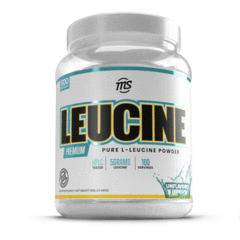
Leucine is one of the amino acids people who train talk about most. You can buy it on its own, as a powder or tablets, or find it inside BCAA, EAA and protein powders. This guide explains what it is, what can honestly be said about what it does, where it is found in food and how to compare two products by reading the label.
What is leucine?
Leucine is one of the twenty amino acids the body uses to build proteins. It is an essential amino acid: the body cannot make it, so it has to come from food. Together with isoleucine and valine it forms the group of three branched-chain amino acids, the BCAA.
On labels you will see it written as L-leucine: the «L» stands for the form found in the proteins in food.
What does leucine do?
Like every essential amino acid, leucine is used by the body to build its own proteins, which is why it has to be part of the diet. The requirement estimated by the World Health Organization (FAO/WHO/UNU report, 2007) is 39 mg per kg of body weight per day for an adult: for a person weighing 70 kg that is about 2.7 g a day, from the diet as a whole. People who eat meat, fish, eggs, dairy or pulses usually take in more than that.
There are plenty of promises about what extra leucine from a supplement would add. Before weighing them up, it helps to know what the law allows.
What does the law say about leucine?
In Europe, statements about the effects of a food or supplement must be authorised by the Commission after an EFSA opinion. For leucine, as for BCAA, no claim has been authorised. That is why we do not describe its effects here, and why we suggest being wary of promises about performance, recovery or muscle mass linked to leucine alone.
The authorised claims cover protein instead: «protein contributes to a growth in muscle mass» and «protein contributes to the maintenance of muscle mass», for foods that are at least a source of protein. If that is your goal, the starting point is the amount of protein in your diet, for example with whey protein.
Where is leucine found in food?
Leucine is present in every protein, in amounts that depend on the source. These are the values measured in a study of four commonly used proteins (Norton and colleagues, Nutrition & Metabolism, 2012). Treat them as a guide: they vary from product to product.
| Protein | Leucine per 100 g of protein | Leucine in 25 g of protein |
|---|---|---|
| Whey | 10.9 g | about 2.7 g |
| Egg | 8.8 g | about 2.2 g |
| Soy | 8.0 g | about 2.0 g |
| Wheat | 6.8 g | about 1.7 g |
The sum is simple: grams of protein in the serving times the share of leucine. Many protein powders print the amino acid profile on the label, so you can read the grams of leucine per serving without any maths.
Leucine, BCAA, EAA or protein: what is the difference?
- Leucine on its own: a single amino acid, as a powder or tablets. You will find it in the Leucine category.
- BCAA: leucine, isoleucine and valine together, in ratios such as 2:1:1 or 10:1:1. The first number is always leucine. Category Branched Amino Acids (BCAA).
- EAA: all nine essential amino acids, leucine included. Category Essential Amino Acids (EAA).
- Protein powders: they contain leucine together with all the other amino acids, essential and non-essential. Category Protein Powder.
These are different products, and you do not compare them on the weight of the pack: you compare them on the grams of each amino acid per serving.
From leucine the body also makes HMB, a metabolite sold as a separate supplement: the guide HMB: what it is, what it does and how to read the label explains it.
How do you read the label of a leucine supplement?
- Grams of leucine per serving: this is the figure to compare, not the weight of the scoop. In flavoured powders part of the serving is made up of flavourings, acids and sweeteners.
- Powder or tablets: unflavoured powder usually costs less per gram, but it tastes bitter and does not dissolve well in water. Tablets are convenient, but each one holds very little: count how many make up the stated serving.
- Instantised: some powders are treated with lecithin, from sunflower or soy, so that they mix more easily. If it is soy, it is an allergen, highlighted in the ingredient list.
- Other ingredients: some formulas add vitamins, other amino acids or caffeine. Read the full list, especially if you want to avoid stimulants.
How do you work out the cost per gram of leucine?
Two sums are enough. Servings per pack: grams in the pack divided by the grams in one serving. A 300 g tub with a 5 g serving holds 60 servings. Cost per gram of leucine: price divided by the number of servings, then divided by the grams of leucine per serving. If that tub costs €18 and each serving contains 5 g of leucine: €18 / 60 = €0.30 per serving, which is €0.06 per gram of leucine.
For tablets, multiply the milligrams of leucine in one tablet by the number of tablets in the pack and do the same sum.
When and how much leucine should you take?
The amount is the one each manufacturer states on the label, and the recommended daily dose should not be exceeded. There is no authorised claim about the time of day: pick whatever suits you, for example with a meal or with your protein shake, and remember the leucine you already get from your diet.
People with maple syrup urine disease (MSUD), a rare metabolic disorder, must not take leucine or BCAA supplements. If you are pregnant or breastfeeding, for children, or if you have a medical condition or take medication, ask your doctor first.
In short
- Leucine is an essential amino acid found in every protein; the estimated requirement is 39 mg per kg per day.
- There are no authorised health claims for leucine in the EU; the authorised ones cover protein.
- Whey is the richest of the commonly used proteins: about 2.7 g of leucine in 25 g of protein.
- Compare the grams of leucine per serving and the cost per gram, not the weight of the pack.
- Check for soy lecithin and the other ingredients.
To compare products with more amino acids, read the guide BCAA amino acids: what they are and how to read the label; for protein, Protein powder: how to read the label.
Food supplements should not be used as a substitute for a varied and balanced diet and a healthy lifestyle. Do not exceed the recommended daily dose stated on the label.
Products in this guide
- -20%

