
DIM and calcium D-glucarate: what they are and what the law says
What DIM (diindolylmethane) and calcium D-glucarate are, where they come from, why neither has any authorised health claim, why synthetic DIM is an unauthorised novel food and how to read doses and calcium on the label.
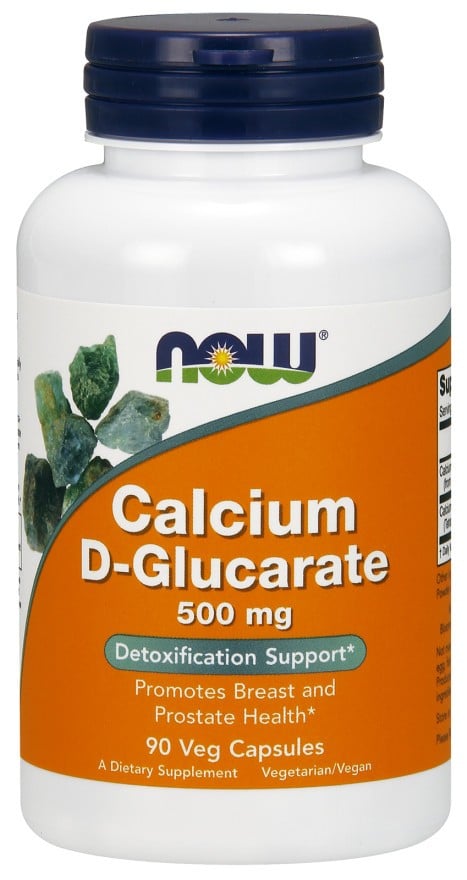
DIM and calcium D-glucarate often appear together on the labels of supplements sold "for oestrogen", and people searching for them mostly want to know one thing: what they do. This guide answers with what can be checked: what they are, where they come from, what European law says and how to read the doses on the label. You will not find promises about hormones here, and the second section explains why.
What is DIM (diindolylmethane)?
DIM, in full 3,3'-diindolylmethane, is a small molecule made of two indole rings joined by a carbon bridge (formula C17H14N2). Food does not contain it ready-made: it comes from cruciferous vegetables, such as broccoli, cauliflower, cabbage, Brussels sprouts and turnips, in three steps.
- Cruciferous vegetables contain glucobrassicin, a glucosinolate.
- When the vegetable is chewed or cut, the enzyme myrosinase breaks it down into several indoles, mainly indole-3-carbinol (I3C).
- In the acidic environment of the stomach, I3C condenses into a mixture of compounds, the main one being DIM.
The DIM in supplements, on the other hand, is almost always synthetic, and the difference in quantity is large: according to a review published in 2021 in Frontiers in Nutrition, reaching with vegetables the DIM levels achieved with a supplement would mean eating kilograms of Brussels sprouts every day. Eating broccoli and taking a DIM capsule are therefore not the same thing.
What does DIM do? What the law allows
In the European Union a supplement may claim a health effect only if that claim has been assessed by EFSA and authorised by the Commission. There is no authorised claim for DIM, and the same goes for indole-3-carbinol and for calcium D-glucarate. Phrases such as "blocks oestrogen", "rebalances hormones", "helps you lose fat" or "supports detoxification" are not authorised claims, whoever writes them.
Among the substances found in supplements, the only authorised claim that mentions hormones is the one for vitamin B6: "Vitamin B6 contributes to the regulation of hormonal activity". It applies only to vitamin B6, and only if the product provides at least 15 % of the nutrient reference values per serving; it does not extend to the other ingredients of the same formula. We cover it in the ZMA guide.
There are studies on DIM and on calcium D-glucarate, but a study is not an authorised claim: until EFSA has assessed an application and the Commission has approved it, no seller may present those effects as a benefit of the product.
Is DIM a novel food?
Yes. A novel food is a food that was not consumed to a significant degree in the European Union before 15 May 1997: to be sold, even inside a supplement, it must be authorised and added to the Union list (Commission Implementing Regulation (EU) 2017/2470).
In the European Commission's novel food catalogue, the entry "3,3'-Diindolylmethane (DIM)", which covers the synthetic form, has the status "Not yet authorised novel food". The same status is given for indole-3-carbinol. The catalogue is not a regulation, but it summarises the position of the Member States' authorities: synthetic DIM needs an authorisation before it can be sold as food, and today DIM is not on the Union list.
This is not a theoretical point. Between 2021 and 2026 the authorities of Belgium, Slovenia, Lithuania and Sweden reported supplements containing DIM as an "unauthorised novel food" nine times in the European rapid alert system RASFF; other notifications concern indole-3-carbinol.
What about DIM "from broccoli"? The catalogue has no separate entry. In Italy broccoli (Brassica oleracea var. italica, part used: the flowering heads) are among the plants allowed in supplements by the ministerial decree of 10 August 2018, with the warning "do not use in case of thyroid dysfunction". For extracts, however, the Ministry's guidelines keep the novel food rules in force: an extract concentrated in DIM does not become allowed just because it comes from a vegetable. DIM is not on the Ministry's list of "other substances with a nutritional or physiological effect" either.
Before buying a DIM supplement it is therefore worth checking two things: whether the label declares DIM as a substance in its own right or as part of a broccoli extract, and whether the product has an Italian label with its notification number to the Ministry of Health.
What is calcium D-glucarate?
It is the calcium salt of D-glucaric acid (formula of the anhydrous salt C6H8CaO8). D-glucaric acid is not foreign to the diet: the human body produces small amounts of it as an end product of the glucuronic acid pathway, and it is found in many fruits and vegetables, with the highest concentrations in grapefruit, apples, oranges and cruciferous vegetables. In the stomach the salt turns into D-glucaro-1,4-lactone, which is absorbed in the intestine.
Is calcium D-glucarate allowed in supplements?
Here the answer is less clear-cut than for DIM. Calcium D-glucarate has no entry in the Commission's novel food catalogue, is not among the consultation requests on novel food status and is not on the Union list. Nor does it appear on the Italian Ministry of Health's list of "other substances with a nutritional or physiological effect", so in Italy there is no maximum intake and no specific warning.
For substances not on that list, the Ministry writes that their use is allowed if they have a history of significant consumption that supports their safety; otherwise they are novel foods. No official document we found says which of the two cases applies to calcium D-glucarate, and no RASFF notifications are recorded. What is certain is that it has no authorised health claims: "detoxifies the liver" or "regulates oestrogen" are not allowed statements.
Does calcium D-glucarate count as a calcium supplement?
Barely. Calcium is only part of the salt's weight: about 16 % in the anhydrous form and about 12.5 % in the tetrahydrate form, the one most used. On the label, then, you need to tell the weight of calcium D-glucarate apart from that of calcium.
An example from our catalogue: Swanson's Calcium D-Glucarate declares 250 mg of glucarate and 30 mg of calcium per capsule. The nutrient reference value for calcium for an adult is 800 mg a day, so one capsule covers 3.75 % of it. The authorised calcium claims, such as the one on the maintenance of normal bones, may only be used if the daily serving provides at least 15 % of the reference values, that is 120 mg: 30 mg falls short. For the same reason, a calcium D-glucarate product does not replace a calcium supplement, which you will find in the Calcium category.
How do you read a DIM and calcium D-glucarate label?
- The name of the substance. "DIM", "diindolylmethane" and "3,3'-diindolylmethane" are the same molecule. "Broccoli extract" or "broccoli powder" are something else: the amount of DIM, if any, must be declared separately.
- The dose per serving, not per pack. Check how many capsules make up a serving: a product may declare 500 mg "per serving" with two capsules, or 250 mg per capsule.
- Elemental calcium. For calcium D-glucarate, the figure that counts for calcium is the one on the "calcium" line, not the weight of the salt.
- Blends. Many products "for oestrogen" combine DIM, calcium D-glucarate, broccoli extract, piperine or vitamin B6. Each ingredient must be judged on its own: the vitamin B6 claim does not apply to DIM.
- The Italian label. A supplement sold in Italy must have an Italian label and must have been notified to the Ministry of Health. Imported products with only the original label deserve a closer look.
Warnings: who should be careful?
- People taking medicines. The same 2021 review reports that DIM inhibits CYP3A4 in the laboratory, the liver enzyme that clears many medicines, and that in a clinical study it changed the metabolites of tamoxifen. Anyone on treatment should talk to their doctor before using it.
- Pregnancy, breastfeeding, minors. These substances affect hormone metabolism and there is not enough data for these groups: better not to use them without medical advice.
- Hormonal disorders. Irregular periods, gynaecomastia, low libido or the symptoms that may follow the use of anabolic drugs or steroids are not treated with a supplement: you need a doctor, and no supplement is authorised to say otherwise.
- The usual rules. Do not exceed the daily dose stated on the label, keep out of the reach of children and do not use the supplement as a substitute for a varied and balanced diet.
In short
- DIM comes from the indole-3-carbinol in cruciferous vegetables; in supplements it is almost always synthetic, at doses that vegetables cannot provide.
- Neither DIM nor calcium D-glucarate has any authorised health claim in the European Union: "blocks oestrogen" and "detoxifies" are not allowed claims.
- Synthetic DIM is classified as a not yet authorised novel food in the Commission's catalogue.
- Calcium D-glucarate contains little calcium: 30 mg in a 250 mg capsule, below the threshold for calcium claims.
- The only authorised claim that mentions hormones is the vitamin B6 one, and it applies only to vitamin B6.
- With medicines, pregnancy or hormonal disorders, the right person to ask is your doctor.
Products in this guide
- -10%

- -10%


Now Foods