Mass gainer: what it is, when to take it, gainer vs protein
What a mass gainer is, how it differs from protein powder, what the law says, how to work out the share of calories from protein on the label and how many calories you really need to gain weight.
A mass gainer, also called weight gainer or simply gainer, is the powder you find next to protein, but with a very different nutrition table: lots of calories per serving, mostly from carbohydrates. This guide explains what it is, how it differs from protein powder, what the law says, how to read the label and how to tell whether a full serving makes sense for you.
What is a mass gainer?
It is a powdered blend of carbohydrates and protein, with a small share of fat, to mix with water or milk. It does one job: it adds calories and protein to your diet in a glass, when regular meals make it hard to get there. Many gainers add other ingredients, such as creatine, vitamins or digestive enzymes.
To tell what kind of product you are looking at, check which line is the highest in the table. In a gainer it is carbohydrates; in protein powder it is protein; in carbohydrate powders, such as Real Carbs Rice by 5% Nutrition (rice bran, oats and maltodextrin), the main lines are carbohydrates and fibre, and the product is not a gainer.
What is the difference between a gainer and protein powder?
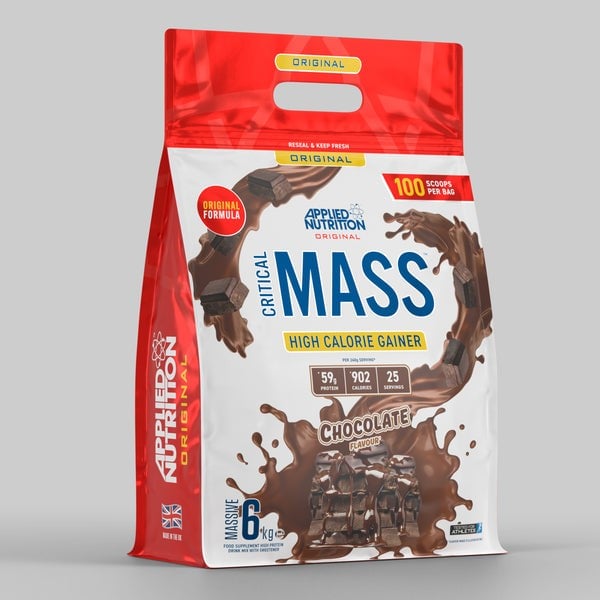
The difference is in the serving and in what it brings. A serving of protein powder is usually 25-30 g and brings mostly protein. A serving of gainer is often 150 g and brings hundreds of calories, most of them from carbohydrates. For example, Critical Mass by Applied Nutrition declares 49.8 g of carbohydrates and 28 g of protein per 100 g.
Which one to choose depends on what you are missing. If you eat enough but fall short on protein, a whey or another protein is enough: the guide Protein powder: how to read the label explains how to read one. If you cannot eat enough overall, a gainer gives you calories and protein together.
What does the law say about mass gainers?
In Europe, statements about the effects of a food must be authorised. There is no authorised claim on weight gain: in the EU register, the applications about body weight or lean mass are not authorised, except those on weight loss or its maintenance and the two on protein. A gainer therefore cannot promise «extra kilos» or «guaranteed mass».
The two authorised claims are about protein: «Protein contributes to a growth in muscle mass» and «Protein contributes to the maintenance of muscle mass». They may be used only for foods that are at least a source of protein, which means at least 12% of the product's energy comes from protein. Above 20% the product may be called high in protein.
How do you read a gainer label?
- Grams per serving: the first line to check. Servings range from about 70 g to 150 g: compare two products on the same serving or on the values per 100 g, not on the weight of the tub.
- Calories per serving: the «% RI» column compares them with the 2,000 kcal reference intake of an average adult. 566 kcal is 28% of that reference.
- Share of calories from protein: multiply the grams of protein by 4 (the kcal per gram set by EU rules) and divide by the calories of the serving. This tells you whether the gainer is closer to a protein or to a carbohydrate.
- Sugars: the «of which sugars» line shows how much of the carbohydrate is sugar. In gainers the rest is usually maltodextrin or other starches.
- Other ingredients: if there is creatine, check the grams per daily dose; the guide Creatine: which one to choose and how to read the label explains how to compare it.
Three gainers compared: what is in one serving?
Values declared on the product pages, for the serving of powder stated by the manufacturer, without the liquid.
| Product | Serving | Kcal | Carbohydrates | Protein | Kcal from protein |
|---|---|---|---|---|---|
| Critical Mass | 150 g | 566 | 74.7 g | 42 g | 30% |
| Critical Mass Professional | 150 g | 595 | 80 g | 45 g | 30% |
| Mass Acceleration | 70 g | 261 | 49 g | 14 g | 21% |
The sum for Critical Mass: 42 g × 4 = 168 kcal, divided by 566 kcal, gives 30%. Mass Acceleration has a serving less than half the size and a lower share of protein: two products with the same generic name can suit different needs. If you mix it with milk, the calories of the milk add to those of the powder.
How many calories do you really need to gain weight?
Fewer than some servings suggest. A 2019 review on the off-season nutrition of natural bodybuilders (Iraki and colleagues) suggests a surplus of about 10-20% above maintenance calories and a weight gain of about 0.25-0.5% of body weight per week; for well-trained lifters it recommends the lower end of the range. At 75 kg that means about 190 to 375 g per week.
The same review reports a study on elite athletes: the group eating about 600 kcal a day more than the other group, which ate freely, gained more fat, with no significant difference in lean mass. The study's authors concluded that for highly trained athletes a surplus of 200-300 kcal a day may be more suitable than 500. In practice, a full serving of almost 600 kcal may be more than you need: half a serving is worth considering.
For protein, the International Society of Sports Nutrition position stand (2017) gives 1.4-2.0 g per kg of body weight per day as sufficient for most people who exercise. At 75 kg that is 105-150 g a day, from the whole diet: the 42 g of one serving are a part, not the total.
When should you take a mass gainer?
There is no authorised claim on timing: follow the label. For Critical Mass, for example, the manufacturer suggests 1 to 3 servings a day depending on your calorie needs. The most useful rule is practical: a gainer helps when an extra meal is hard to fit in, so take it between meals or at times when you usually skip food, always in addition to your diet and not instead of a full meal.
If after a few weeks your weight rises faster than 0.5% a week, cut the serving; if it does not rise, the problem is the daily total, not the time you take the gainer.
Lean gainer, clean gainer, vegan gainer: what changes?
- Lean gainer: there is no legal definition of «lean». It usually means a higher share of protein and fewer calories per serving: check it with the share of calories from protein.
- Clean gainer: «clean» is also the manufacturer's choice. In R1 Clean Gainer by Rule One, for example, it means carbohydrates from oats, brown rice and quinoa and no added sugars: read the ingredient list to see what it means in the product in front of you.
- Vegan gainer: it uses plant proteins, such as pea, rice or soy, instead of milk proteins. The rest of the label reads the same way.
What can this guide not tell you?
How much you need depends on your weight, how much you train and what you already eat: no table knows that for you. A gainer is a very high-calorie food with a lot of carbohydrate: if you have diabetes or other conditions, if you are pregnant or breastfeeding, if you are under 18 or on medication, ask your doctor first. Gainers often contain milk and soy: check the allergens on the label.
In short
- A mass gainer is a powder of carbohydrates and protein that adds calories to your diet: carbohydrates are the highest line in the table.
- In the EU there are no authorised claims on weight gain; there are on protein, if at least 12% of the calories come from protein.
- Compare gainers on the same serving: calories, grams of protein and share of calories from protein (grams × 4, divided by the calories).
- A 2019 review suggests a 10-20% surplus and a gain of 0.25-0.5% of body weight per week: a full serving may be too much.
- Take it when an extra meal is hard to fit in, in addition to your diet.
You will find all products in the Weight gainer category; if you only fall short on protein, see protein powder.
Food supplements should not be used as a substitute for a varied and balanced diet and a healthy lifestyle. Do not exceed the recommended daily dose stated on the label.
Products in this guide
- -10%

- -10%

Applied Nutrition
- -10%


- -10%

Allnutrition